
Introduction: Decoding the Quest for Superior Strength and Speed
For the elite athlete, the pursuit of enhanced strength and explosive speed is an unrelenting journey. Coaches, nutritionists, and sports scientists continually refine methodologies, yet the fundamental question persists: what truly drives faster, more substantial gains? Is it the meticulously crafted training program, the well-researched ergogenic aid like creatine, or the acute performance enhancement offered by a pre-workout supplement? This comprehensive guide delves into each of these pillars, dissecting their mechanisms, evidence-based benefits, and optimal application for maximizing an athlete's physical potential. We aim to provide a data-driven perspective, empowering you to strategically integrate these components into your regimen for unparalleled progress.
Programming: The Undisputed Foundation of Athletic Superiority
Before any supplement can exert its effect, the training stimulus itself must be precisely orchestrated. Programming, often undervalued in the search for quick fixes, is unequivocally the most critical determinant of long-term strength and speed development. It dictates the specific adaptations the body undergoes, providing the blueprint for physiological change.
Principles of Progressive Overload
At the heart of any effective program is progressive overload – the gradual increase in stress placed upon the musculoskeletal and neurological systems. This can manifest in various forms:
- Increased Load: Lifting heavier weights over time.
- Increased Volume: Performing more sets or repetitions.
- Increased Density: Completing the same work in less time, or more work in the same time.
- Increased Frequency: Training a muscle group or movement pattern more often.
- Enhanced Technique: Improving movement efficiency allows for greater force production.
- Range of Motion: Increasing the distance a weight is moved.
Without consistent application of progressive overload, adaptation plateaus, irrespective of supplemental support.
Periodization: Macro, Meso, and Microcycles
Elite programming employs periodization—a systematic organization of training into phases to optimize performance at specific times while minimizing overtraining. Key models include:
- Linear Periodization: Characterized by high volume, low intensity in initial phases, progressing to low volume, high intensity. Effective for novice to intermediate athletes, but can lead to plateaus for advanced individuals.
- Undulating Periodization (Daily or Weekly): Involves more frequent fluctuations in volume and intensity (e.g., strength day, hypertrophy day, power day within a week). This approach has shown superior results for strength and power gains in trained individuals by providing varied stimuli and promoting constant adaptation.
- Block Periodization: Divides training into highly focused blocks (e.g., accumulation, transmutation, realization). Each block targets specific physiological adaptations, allowing for greater training specificity and recovery between intense phases. This model is particularly effective for high-level athletes with defined competitive seasons.
Specificity, Volume, Intensity, and Frequency
For strength and speed, programming must adhere to the principle of specificity. Training modalities should mimic the biomechanical demands of the target movement or sport. For instance, sprinters benefit more from power cleans, squats, and plyometrics than from isolated bicep curls.
- Volume: The total amount of work performed (sets x reps x load). Optimal volume for strength and hypertrophy generally falls within 10-20 working sets per muscle group per week, adjusted based on individual recovery capacity.
- Intensity: The relative effort or load used, often expressed as a percentage of 1-Rep Max (1RM). High intensity (80-95% 1RM) is crucial for strength adaptations, while moderate intensity (60-80% 1RM) with explosive intent builds power.
- Frequency: How often a muscle group or movement pattern is trained. Higher frequencies (2-4 times per week per muscle group) have shown superior results for strength and hypertrophy in advanced athletes, allowing for more frequent practice of movement patterns and greater overall weekly volume without excessive fatigue in a single session.
Ultimately, programming is the architect of athletic development. Without a well-structured, progressively overloaded, and intelligently periodized plan, even the most potent ergogenic aids will yield suboptimal results.
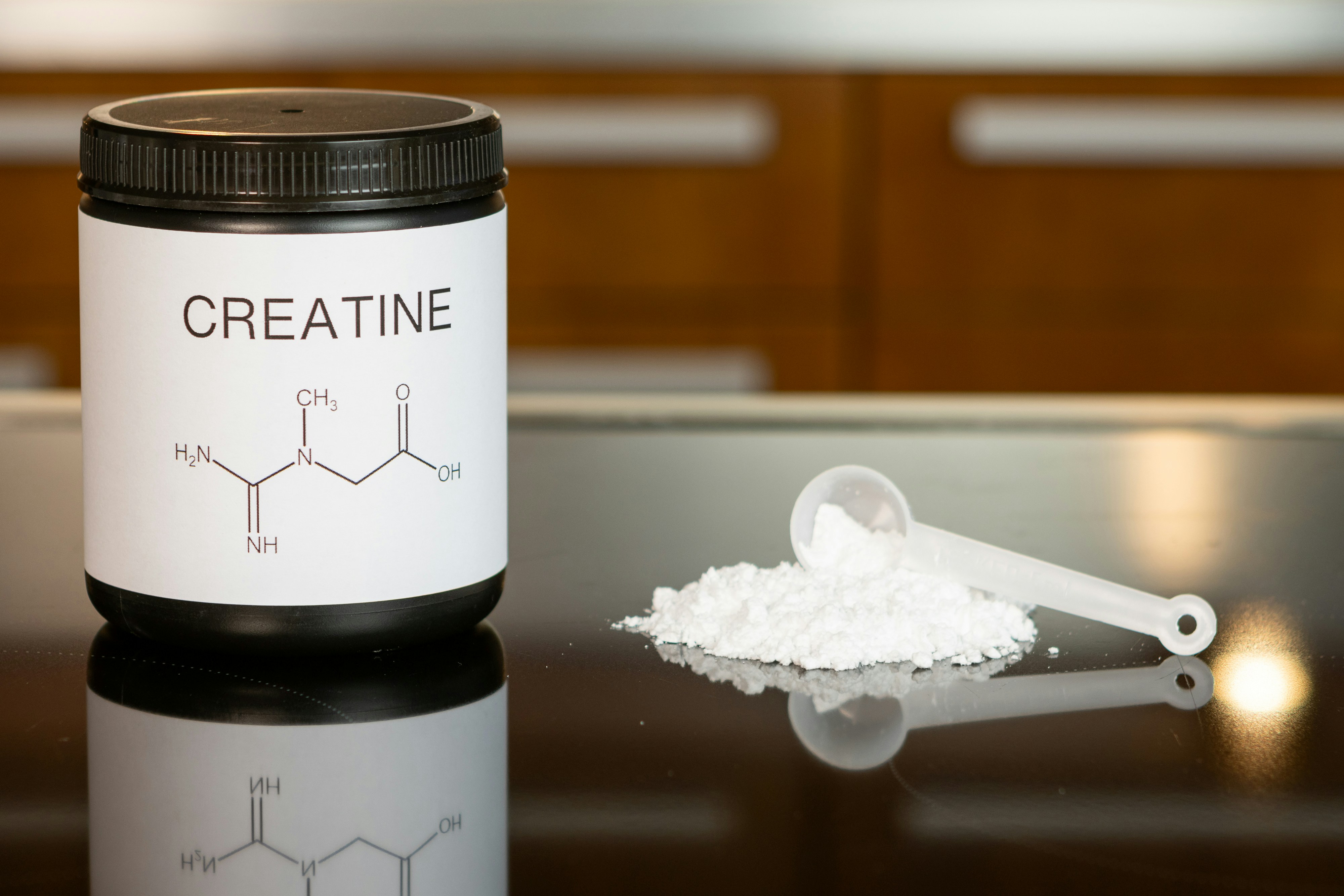
Creatine Monohydrate: The Gold Standard Ergogenic Aid
Beyond the gym floor, creatine monohydrate stands as one of the most extensively researched and consistently effective supplements for enhancing strength, power, and muscle mass. Its mechanisms are deeply rooted in bioenergetics.
Mechanism of Action: ATP Resynthesis
Creatine plays a pivotal role in the phosphocreatine (PCr) energy system, which is critical for short, high-intensity activities (e.g., heavy lifts, sprints). When ATP (adenosine triphosphate), the body's immediate energy currency, is used, it loses a phosphate group and becomes ADP (adenosine diphosphate). Creatine phosphate donates its phosphate group to ADP, rapidly regenerating ATP. By increasing intramuscular creatine stores, supplementation enhances the capacity of this rapid ATP resynthesis pathway, thereby delaying fatigue and improving performance during anaerobic efforts.
Proven Benefits for Elite Athletes
- Increased Strength and Power: Numerous studies demonstrate that creatine supplementation significantly increases maximal strength (1RM) and power output in resistance-trained individuals. This is directly attributable to enhanced ATP availability, allowing for more repetitions at a given load or greater force production during explosive movements.
- Enhanced Muscle Mass: While not directly anabolic, creatine can contribute to muscle hypertrophy through several mechanisms, including increased training volume, cell swelling (a potential anabolic signal), and satellite cell activation.
- Improved Recovery: Some research suggests creatine can reduce muscle damage and inflammation following intense exercise, accelerating recovery and allowing for more frequent high-quality training sessions.
- Cognitive Benefits: Emerging research indicates creatine may also support cognitive function, particularly in situations of sleep deprivation or mental fatigue, which can be relevant for athletes managing demanding schedules.
Optimal Dosing and Usage
The most common and effective protocol involves a loading phase followed by a maintenance phase:
- Loading Phase: 20g per day (divided into 4 doses of 5g) for 5-7 days. This rapidly saturates muscle creatine stores.
- Maintenance Phase: 3-5g per day indefinitely. Lower doses may be effective without a loading phase but take longer to achieve full saturation.
Creatine timing is not as critical as consistent daily intake, though some prefer post-workout with carbohydrates and protein to enhance uptake. Micronized creatine monohydrate is recommended for its superior solubility and absorption.
Safety Profile and Dispelling Myths
Creatine is one of the safest and most well-tolerated supplements. Concerns about kidney damage, dehydration, or cramping have been extensively debunked by scientific literature. When consumed within recommended dosages by healthy individuals, creatine poses no significant health risks.
Pre-Workout Formulations: Acute Performance Optimization
Pre-workout supplements are designed to acutely enhance exercise performance, focus, and energy during a training session. Unlike creatine, which builds up in the body over time for chronic benefits, pre-workouts provide an immediate physiological boost. However, their efficacy hinges on their ingredient profile.
Key Ingredients and Their Mechanisms
- Caffeine: The primary psychoactive ingredient, caffeine acts as a central nervous system (CNS) stimulant. It blocks adenosine receptors, reducing perceptions of fatigue and pain, increasing alertness, and enhancing motor unit recruitment. Doses of 3-6 mg/kg body weight 30-60 minutes pre-exercise are common for performance enhancement.
- Beta-Alanine: A non-essential amino acid that combines with histidine to form carnosine in skeletal muscle. Carnosine acts as an intracellular buffer, reducing lactic acid accumulation during high-intensity exercise. This delays fatigue in efforts lasting 60 seconds to several minutes, improving muscular endurance. Typical doses range from 3.2-6.4g per day, often causing a harmless tingling sensation (paresthesia).
- L-Citrulline or Citrulline Malate: L-Citrulline is converted to L-arginine in the body, which then increases nitric oxide (NO) production. NO is a potent vasodilator, improving blood flow to working muscles. This can enhance nutrient and oxygen delivery, reduce metabolic byproducts, and improve muscle pump. Doses of 6-8g of L-citrulline or 8-12g of citrulline malate are often effective.
- Betaine Anhydrous (Trimethylglycine): Acts as an osmolyte, helping to maintain cell volume and hydration. It also plays a role in methyl group donation, potentially improving power output, muscle endurance, and reducing fatigue. Doses of 1.25-2.5g, often split into two daily doses, have shown benefits.
- Nitrates (e.g., Beetroot Extract): Dietary nitrates are converted to nitric oxide in the body, similar to citrulline, promoting vasodilation and reducing the oxygen cost of exercise. This can improve endurance performance and reduce fatigue. Doses providing 300-600mg of nitrates are common.
- Creatine Monohydrate: Some pre-workouts include creatine. While convenient, the daily dosage in a single pre-workout serving is often insufficient for saturation, making separate creatine supplementation crucial.
Considerations for Use
While beneficial, pre-workouts require careful consideration. The stimulant content can be high, potentially leading to anxiety, jitters, or sleep disturbances, especially if taken too close to bedtime. Proprietary blends often obscure individual ingredient dosages, making it difficult to assess efficacy and safety. Athletes should prioritize products with transparent labels and scientifically backed dosages of key ingredients.
The Synergistic Advantage: How Programming, Creatine, and Pre-Workout Intersect
Understanding the individual roles of programming, creatine, and pre-workouts is essential, but their true power lies in their synergistic application. They operate on different timelines and mechanisms, creating a powerful ecosystem for strength and speed development.
Programming as the Driver
The training program is the primary stimulus for adaptation. It dictates *what* muscles are worked, *how* intensely, and *when* recovery occurs. Without a progressive, specific, and periodized program, the body lacks a clear signal to grow stronger or faster. Creatine and pre-workouts act as amplifiers of this signal, not originators.
Creatine: Enhancing the Adaptive Response
Creatine acts as a chronic enhancer of the body's ability to respond to the programming stimulus. By increasing intramuscular PCr stores, it allows athletes to perform more high-quality work within a given training session – more reps, heavier loads, or more explosive movements. This augmented training capacity translates directly into greater progressive overload over time. The stronger training stimulus, facilitated by creatine, drives superior long-term adaptations in strength, power, and muscle mass.
Pre-Workout: Optimizing Acute Performance
A well-formulated pre-workout optimizes the athlete's immediate capacity to execute the demands of the training program. Caffeine enhances focus and reduces perceived exertion, allowing for more intense effort. Beta-alanine buffers fatigue, enabling extra reps in demanding sets. Citrulline and nitrates improve blood flow, supporting sustained performance. While these effects are acute, they collectively allow the athlete to push harder, concentrate better, and maintain higher quality output throughout a crucial training session. This acute boost, when applied consistently to a well-designed program, can lead to more effective training bouts and accelerate adaptation.
The Integrated Model
Imagine a well-crafted periodized program targeting peak strength. Creatine ensures that the muscle cells are primed to generate maximal force and recover optimally between high-intensity sets across weeks and months. On the day of a particularly demanding strength session, a pre-workout provides the immediate neural drive, focus, and metabolic support to push through plateaus and achieve new personal bests. This layered approach—programming as the foundation, creatine as the long-term enhancer, and pre-workout as the acute performance optimizer—creates a potent environment for accelerated strength and speed gains.
Prioritization for Elite Athletic Development
Given their distinct roles, how should an elite athlete prioritize these components?
- Programming (Non-Negotiable First): A sophisticated, individualized, and progressively overloaded training program is the absolute bedrock. Without it, the other elements are largely ineffective. Invest heavily in coaching, intelligent design, and consistent execution. This dictates the stimulus for all adaptation.
- Creatine Monohydrate (Foundational Supplement): Once programming is solid, creatine should be considered a fundamental, almost 'dietary staple' supplement. Its chronic benefits are robust, safe, and cost-effective, directly improving the capacity to perform and adapt to intense training. It provides a consistent enhancement to recovery and performance, regardless of the specific daily workout.
- Pre-Workout Formulations (Strategic Acute Boost): Pre-workouts serve as a valuable tool for strategic acute performance enhancement. They are best utilized before particularly challenging sessions, competition simulations, or when energy levels are suboptimal due to travel or demanding schedules. They should not be relied upon as a substitute for adequate sleep, nutrition, or a well-structured program. Athletes must assess their tolerance to stimulants and select products transparently disclosing ingredient dosages.
It is crucial to remember that individual responses vary. Some athletes may be highly sensitive to caffeine, while others may not experience significant benefits from beta-alanine. A personalized approach, guided by self-experimentation and professional oversight, is paramount.
Conclusion: The Holistic Path to Superiority
The quest for becoming stronger and faster is not a singular pursuit but a multi-faceted endeavor. The answer to what actually makes you stronger faster isn't a single element among programming, creatine, or pre-workout; rather, it's the intelligent and synergistic integration of all three. A meticulously crafted, periodized training program forms the essential foundation, providing the precise physiological demands necessary for adaptation. Creatine monohydrate acts as a powerful, evidence-backed accelerator, optimizing the body's capacity to perform and recover from these demands over the long term. Finally, strategically deployed pre-workout supplements offer an acute edge, enhancing focus, energy, and endurance to maximize performance during critical training sessions.
For the elite athlete, neglecting any of these pillars risks leaving potential gains on the table. By embracing a holistic, data-driven strategy that prioritizes expert programming, leverages the proven benefits of creatine, and judiciously employs pre-workout formulations, you unlock the ultimate blueprint for sustained, accelerated strength and speed development, pushing the boundaries of human performance.