For serious athletes, muscular failure is a metric of success. But when your Central Nervous System (CNS) fails, your entire physiological framework collapses. Here is how data-driven athletes are using telemetry to engineer perfect recovery.
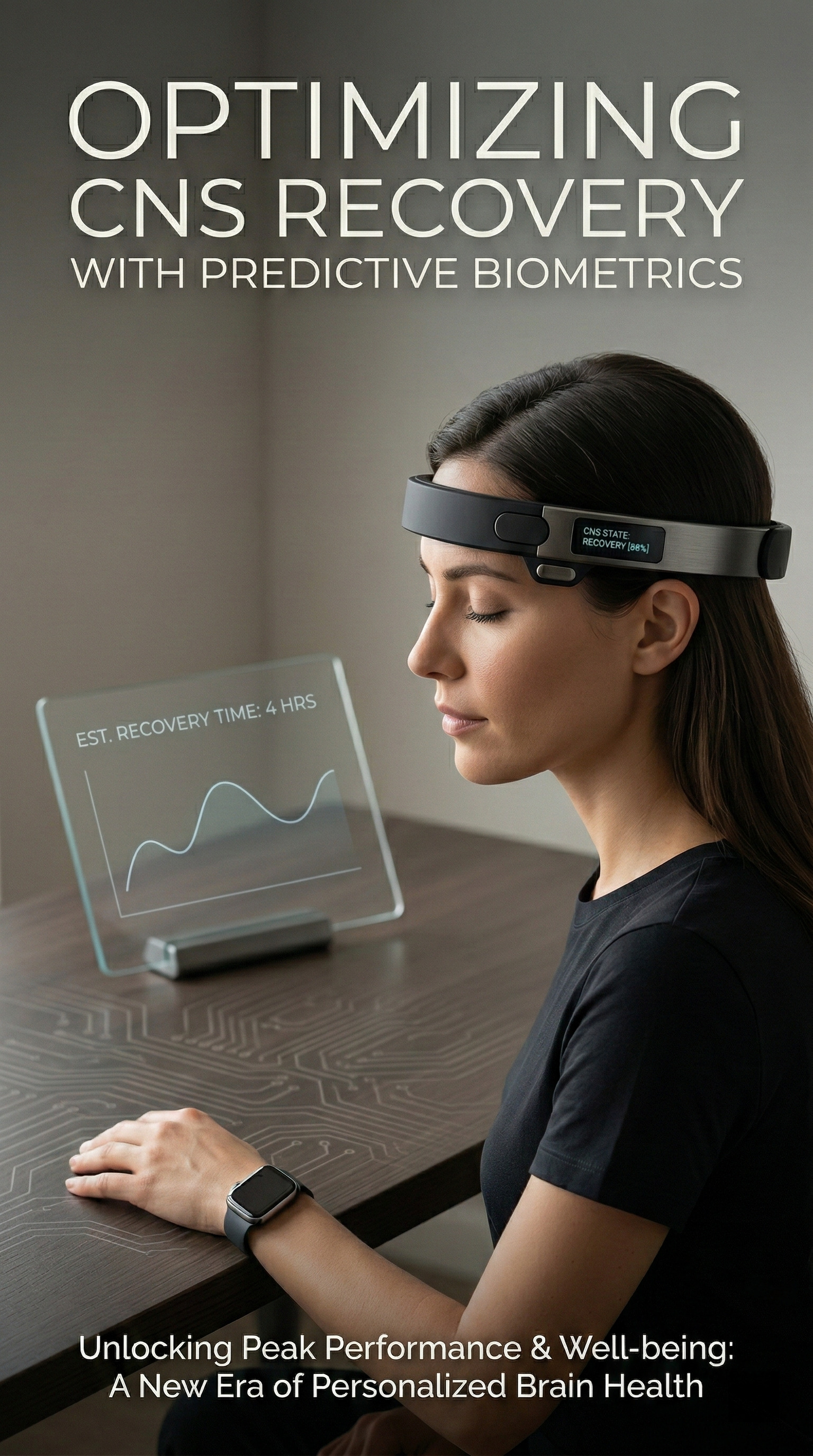
What is Central Nervous System (CNS) Fatigue?
When we discuss training volume, most athletes focus strictly on peripheral fatigue—the localized exhaustion of muscle fibers, glycogen depletion, and lactic acid buildup. While localized, peripheral fatigue is relatively simple to recover from using standard nutrition and sleep protocols.
Central Nervous System (CNS) fatigue is entirely different. It originates in the brain and spinal cord. It is a systemic reduction in your motor cortex's ability to recruit high-threshold motor units. In simpler terms: your muscles might be chemically ready to lift, but your brain refuses to send a strong enough electrical signal to move the weight.
"You cannot out-sleep a fried nervous system. If your motor cortex isn't firing, your 1-Rep Max drops by 15%, regardless of how much protein you consumed."
The Danger of the Overtraining Threshold
The fitness industry often romanticizes the concept of "grinding." However, pushing past your CNS threshold doesn't trigger hypertrophy; it triggers a cascade of systemic failures known as Overtraining Syndrome (OTS).
Symptoms of a degraded CNS profile include:
- Unexplained drop in grip strength (one of the purest indicators of neural readiness).
- Elevated resting heart rate upon waking.
- Lethargy masquerading as lack of motivation.
- Loss of explosive power during compound lifts (squat, bench, deadlift).
How Predictive Biometrics Change the Game
Historically, athletes relied on subjective "feel" to determine if their CNS was recovered. Today, operating systems like ASCEND utilize predictive biometrics to replace guesswork with hard telemetry.
1. Heart Rate Variability (HRV) Analysis
HRV measures the variance in time between each heartbeat. A high HRV indicates your parasympathetic nervous system (rest and digest) is dominating, meaning your CNS is highly recovered. A suppressed HRV means your sympathetic system (fight or flight) is still active, fighting systemic stress from your previous heavy lifting session.
2. Kinematic Load Tracking
Not all training volume taxes the CNS equally. A 400lb deadlift fries the nervous system significantly more than 400lbs of total bicep curls. By tracking the exact kinematic load—calculating barbell velocity, RPE (Rate of Perceived Exertion), and compound vs. isolation ratios—algorithms can mathematically predict how many hours your CNS requires before your next high-intensity output.
The ASCEND Protocol for Neural Recovery
This is where ASCEND transitions from a standard workout tracker to an Elite Performance OS. ASCEND does not just record what you lifted; it correlates your Training Volume (lbs) with your rest intervals and historical PR data to predict systemic fatigue.
By utilizing the upcoming Wearable Sync integration, ASCEND will cross-reference your tracked active minutes and volume load against your bio-feedback to provide zero-latency insights. If the system detects a potential CNS burnout, it signals you to pivot from a heavy 5x5 compound day to an accessory hypertrophy focus, ensuring you never hit a wall.
Stop Guessing Your Recovery
Serious athletes don't leave performance to chance. Download the ASCEND APK and start tracking your total kinematic volume today.
Initialize System